
Balancing Structure and Stimulation

Over the past week I have been thinking a lot about the concept of balancing stimulation and structure in our lives. Initially, it came from thinking about how to organise my writing and design work (more on that in the second half of this newsletter), but then I also decided that it was an important understanding that I wanted to add in to the stress management book for teens that I am currently writing.
The Balance of Stimulation and Structure
To function well the human brain needs a balance of structure and stimulation.
The brain thrives on consistency + novelty. Consistency in daily habits (hydration, movement, sunshine), and novelty in bigger experiences (travel, learning, new cultures).
Neuroscience and Wellness – Substack
When you are experiencing an imbalance of stimulation and structure, then it can cause you to feel stressed.

What are Structure and Stimulation?
Structure is things like routine, organisation, guidelines and boundaries. Structure gives us safety, security and a sense of home.
Stimulation is anything that causes your neurons to fire and form new pathways or which stimulates the release of dopamine in your body. This includes things like doing and learning new things, completing games and challenges, moving your body in new ways, being creative, walking in nature (especially barefoot) and listening to music you love. Basically, anything where your brain has to process new information or anything which you find interesting, exciting or pleasurable.
Experiencing pleasure in positive ways helps to keep your brain and body healthy.
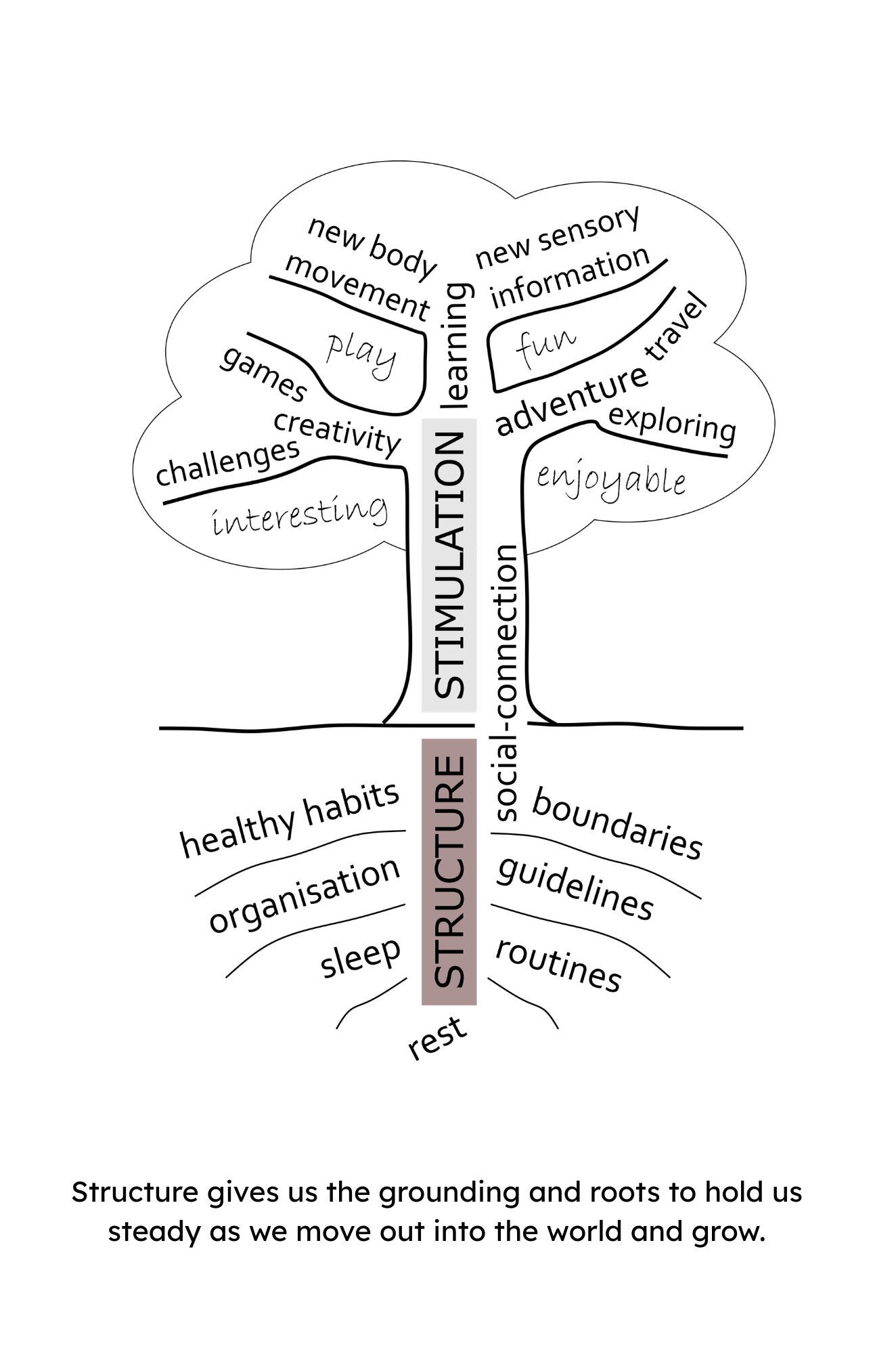
The Right Balance is Personal and Dynamic
The right balance of stimulation and structure is a personal thing. It is influenced by age, neuro-type and how mentally and emotionally resourced you are. Generally, children and teenagers need more stimulation than adults, and people who have experienced trauma or are experiencing high levels of stress need much more structure than stimulation. People with neuro characteristics of ADHD need more stimulation because they have naturally low levels of dopamine, and people with neuro characteristics of autism tend to need more structure.
When you are experiencing too much structure you can feel bored, restricted, unhappy, depressed, anxiousness to perform or to please other people, perfectionism, pressured, tired, or unmotivated.
When you are experiencing too much stimulation you might feel agitated, on-edge, unsettled, aggressive, impulsive, unfocused and your mind may be constantly racing and overthinking.
Both over-stimulation and excessive structure can put your body into a stress state.
Balancing Structure and Stimulation for Me Personally
Children create freely until someone asks what it’s supposed to be. - Kunlun | Playful Brains
Over the past couple of weeks, I have been on holiday and then experienced the loss of my beloved cat. Both experiences offer opportunities for reflection on life and how you are living it.
I resigned from my job in high school learning support at the end of last year. The role had changed and it didn’t feel like a good fit for me anymore. I decided to give myself a year of permission to live life the way I really wanted to and to show up fully and coherently rather than living in terms of roles. Primarily what I want to do is write and create, so I threw myself into that. I created a second Substack publication thinking I had time to manage that now, and at the back of my mind was the little nagging anxiety that I now needed to create more self-employed income.
I have been burning myself out. Something I tend to do a lot. The extra time I have seems to disappear into a vacuum and I have been working the same long hours as I was when I was working a paid job and writing “on the side”. This is not how I wanted to live my life and the way I am doing things is not working for me.
I self-identify as AuDHD which is neurodivergent with a blend of autistic and ADHD traits. My autistic brain wants security, routine, organisation and to know what to expect through each day without curveballs or too much social demand. My ADHD brain is highly creative and highly curious. It loves to learn and create, and pops with new ideas constantly. The outcome of this is that I am good at setting up systems, and also change things up frequently. I realise that I have been trying to balance these two aspects my whole life, but I have only become aware of how my neurodivergent brain operates in the last couple of years.
Conventional Marketing Models May Not Fit Divergent Brains
I want to simplify things in a way that satisfies both aspects of my Jeckyll and Hyde brain. I have been learning and practicing mainstream marketing for over ten years and I have been following it by doing things like niching and choosing a target audience and creating focused transformation statements. When I do, I feel like I am dividing myself into parts and trying to fit in other people’s boxes. My neurodivergent brain sees interconnections between everything, and when I try to put things in silos it doesn’t work for me. I feel unsettled and constricted.
When I tune into my true self, what I want to express is all of myself as a whole not in niche parts. I know the marketing point of view that doing that makes it hard for people to know if they want to follow me or to know exactly what I offer, but if I don’t do that then I am going to keep doing what I have been doing and jumping around rebranding and starting new projects all the time.
My Substack Publications are Changing
Thus, I have decided to meld my two Substack publications into one and keep aspects of both, and simply write about what is interesting and important to me. Wellbeing is my key interest so most of the time I will write about physical, mental and emotional health, but from time to time I will share other things that I find engaging or helpful such as art, poetry, music or photography.
My decision is that my brand is going to be me, just me. I invite you to connect with me because you like the same things as me or what I have to say. As I write that I realise a lot of people on Substack do this and I have over-complicated things in my striving to build structure – I send love and acceptance to my type A, perfectionist autistic side who does this.
I do need some structure to keep that side of me happy though. This is what I am planning for my publication:
New name: Janine Lattimore - Living Life Well
Daily Quote of the Day note - because I love inspirational quotes
Weekly newsletter – mostly about wellbeing topics
Monthly Hot Tips – a round up post of things I am loving at the moment which is a place for my random ADHD brain to freely share
A quote of the week graphic poster plus colouring page PDF – to give my design side a focus and outlet
I want to have more fun. Adult life easily gets too serious. Let’s also play games, and do quizzes, challenges and competitions.
Plus, I have a couple of books and a course planned as projects for this year. I will share content from the books through the weekly newsletter as I am writing them in the way that I am doing with the teen stress book at the moment. This makes more efficient use of my time and is an opportunity for me to get feedback on the content as I am writing.
What’s Next For You?
Thank you to those of you who have subscribed and followed so far. I have appreciated your interest and support. If this change from me means that what I am offering is no longer of interest to you then I understand and feel free to unsubscribe or unfollow.
To those of you who choose to stay with me, it is probably going to be bit like being on a magical mystery ride, but I will do my best to make it enjoyable and worthwhile.
I invite you to come join me on this life journey and to live it fully and well.
You may also want to take some time to reflect on what the right balance of stimulation and structure is for you at the moment.
Aroha nui, much love
Janine
Your tree diagram reminded me of the tree of life exercise - have you done it before? If you want to read about it, i'll leave the link here: https://nathanbweller.com/tree-life-simple-exercise-reclaiming-identity-direction-life-story/ it's a lovely exercise.